Tree Extinction Due to Human Induced Environmental Stress
by Daniel Brouse & Sidd Mukherjee
(Originally titled: “Foliage Spoilage & the Trees' Canopy Collapse”)
A study by The Membrane Domain (2005–ongoing)
I. Overview
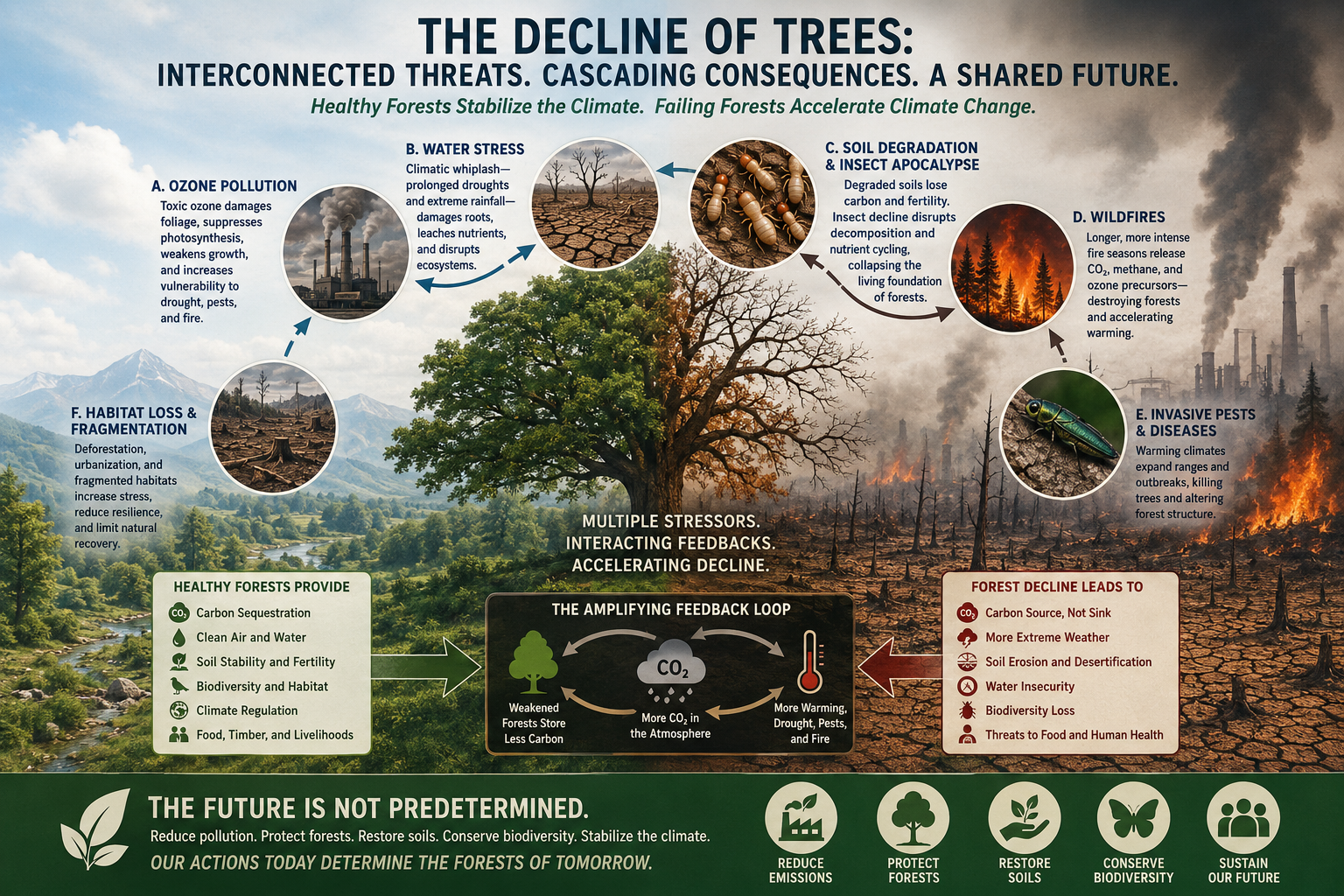
Long-term field observations, remote-sensing data, and new climate-biosphere models now converge on a disturbing conclusion: Earth's forests are undergoing rapid, nonlinear decline driven by a cascading series of human-induced stressors.
What began in 2001 as a study of visible canopy loss has evolved into documentation of a global systemic collapse. Satellite evidence confirms that large forest regions--including the African tropical moist broadleaf biome--have already shifted from net carbon sinks to net sources in a period of only seven years (Mensah et al. 2025).
These processes are not isolated. They are coupled, mutually reinforcing feedback loops capable of accelerating tree mortality far faster than traditional models predicted.
II. Sampling of Contributing Variables
A. Ozone Pollution: A Major Driver of Global Tree Decline
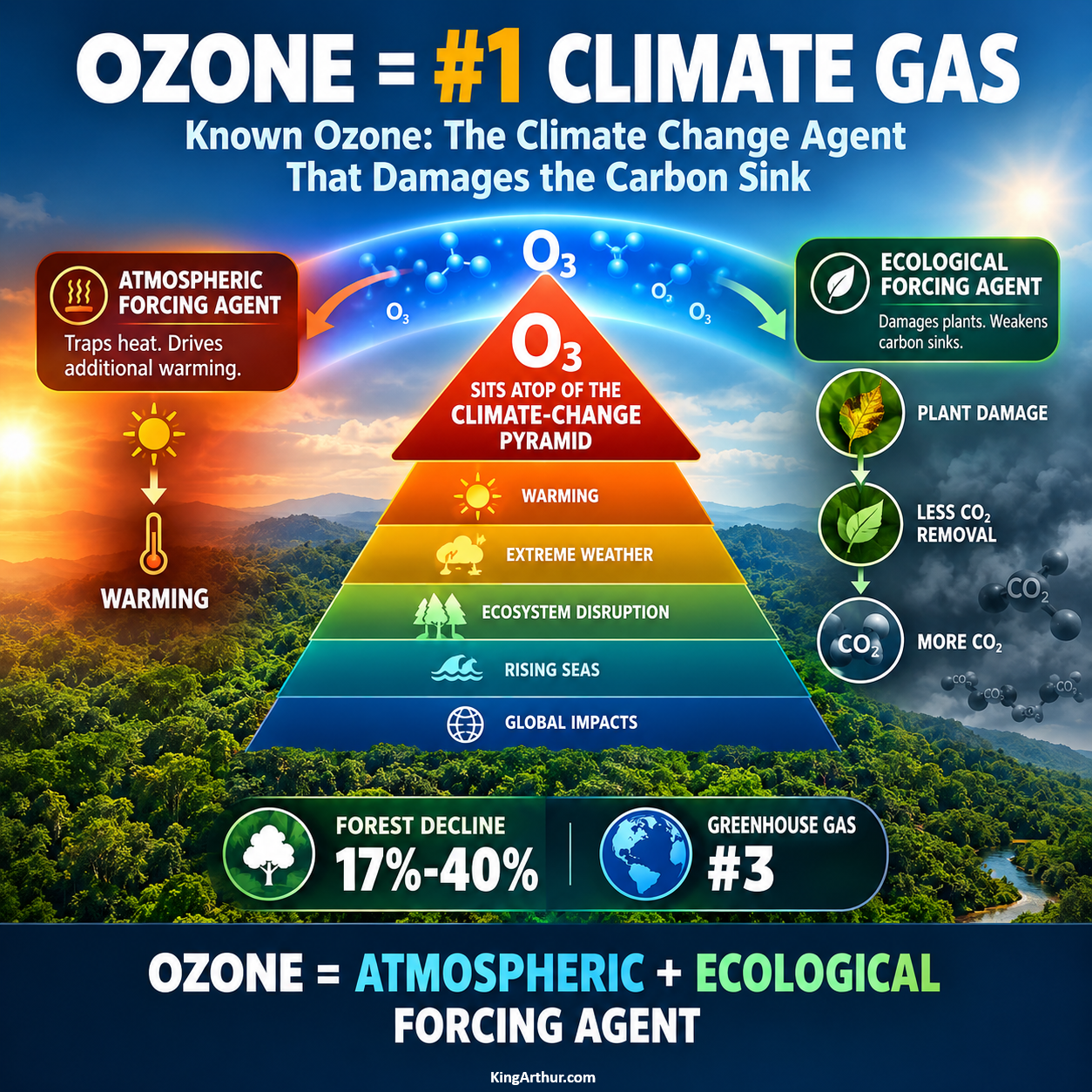
Pollution remains one of the most significant drivers of global tree decline—and one of the most underestimated.
At the center of this crisis is tropospheric ozone (O₃), a toxic oxidant produced through the atmospheric reactions of combustion byproducts, including nitrogen dioxide (NO₂), volatile organic compounds (VOCs), and methane (CH₄). Unlike the protective ozone layer in the stratosphere, ground-level ozone is a powerful biological toxin that damages vegetation, disrupts ecosystem function, and weakens Earth’s natural carbon storage capacity.
Climate change is increasingly understood not as a single forcing mechanism, but as a complex network of interacting atmospheric, ecological, chemical, and biological feedback loops. While carbon dioxide (CO₂) remains the dominant anthropogenic greenhouse gas, secondary feedback systems are becoming increasingly important in determining the trajectory, intensity, and structure of future warming.
Among these feedbacks, ozone occupies a uniquely important position because it functions simultaneously as:
- a greenhouse gas;
- a regulator of atmospheric chemistry;
- a biological stressor;
- and a climate feedback multiplier.
The ozone-driven feedback pathway can be summarized as:
Combustion → Ozone Formation → Vegetation Damage → Reduced Carbon Uptake → Increased Atmospheric CO₂ → Additional Warming → Increased Wildfire Activity → Additional Ozone Formation
Unlike many climate variables that operate primarily within a single subsystem, ozone directly connects:
- atmospheric chemistry,
- ecosystem health,
- wildfire dynamics,
- plant physiology,
- atmospheric circulation,
- and global carbon cycling.
As a result, ozone amplification mechanisms can accelerate warming indirectly by weakening the very biological systems responsible for removing carbon dioxide from the atmosphere.
Ozone-Induced Vegetation Damage
Ozone enters plant leaves through stomata, where it reacts with plant tissues and generates oxidative stress. This process damages cellular structures, disrupts normal plant metabolism, and reduces the ability of vegetation to capture and store carbon.
Ozone exposure:
- damages foliage and suppresses photosynthesis;
- reduces stomatal conductance and plant growth;
- diminishes drought and heat tolerance;
- increases vulnerability to pests, pathogens, and wildfire.
Decades of research demonstrate that ozone exposure can reduce plant growth by 10–40%, depending on species sensitivity, ozone concentration, and duration of exposure. In many cases, ozone exposure does not merely slow growth—it can kill plants outright, either through direct damage to leaves and roots or by weakening their ability to survive additional environmental stressors.
This creates a compounding cycle of ecosystem vulnerability. Ozone-stressed vegetation becomes increasingly susceptible to drought, extreme heat, insects, disease, and fire, accelerating forest decline and undermining the natural systems that sustain human civilization.
Ozone and Declining Global Carbon Uptake
The impacts of ozone pollution extend beyond individual trees. Forests, grasslands, wetlands, and soils have historically absorbed a substantial fraction of human carbon emissions, functioning as critical components of Earth’s climate regulation system.
Increasing ozone exposure threatens this stabilizing mechanism.
As ozone suppresses photosynthesis and damages vegetation:
- forest productivity declines;
- drought resilience weakens;
- carbon storage capacity deteriorates;
- ecosystem mortality increases.
Multiple peer-reviewed studies confirm that ozone pollution has significantly reduced net primary productivity (NPP), particularly in sensitive agricultural regions and forest ecosystems. In some ecosystems, productivity losses have been measured at 20–70%, depending on species sensitivity and exposure levels.
More concerning, global observations indicate that forest carbon sinks are under increasing stress, with some regions showing reduced carbon uptake and movement toward carbon neutrality or carbon-source behavior. This transition represents a major threat because it removes one of Earth’s most important mechanisms for moderating atmospheric CO₂ concentrations.
Ozone, Wildfires, and Cascading Climate Feedbacks
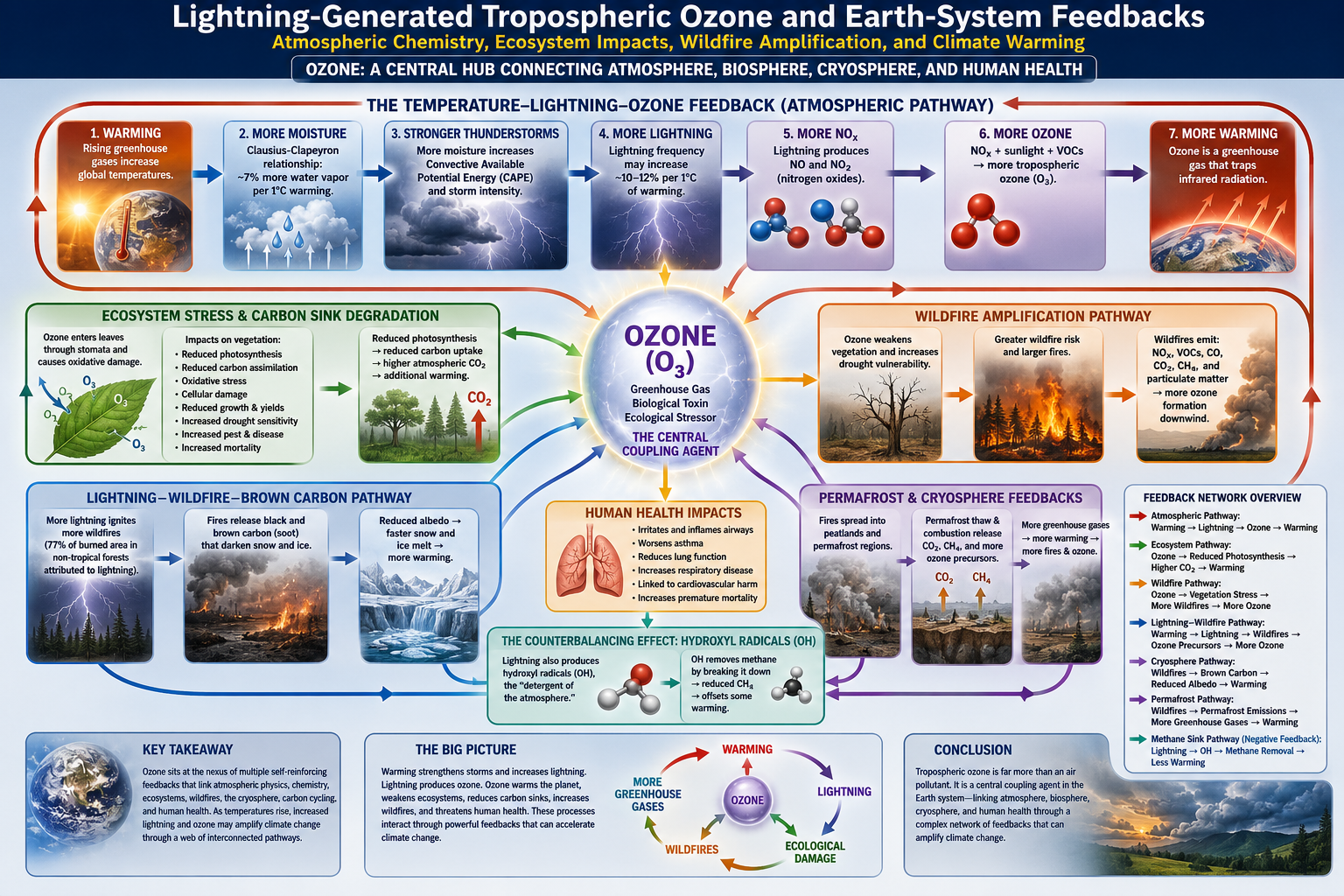
Ozone pollution is deeply interconnected with fossil fuel combustion, warming, drought, and wildfire activity.
Fossil fuel combustion increases both CO₂ emissions and ozone precursors. Ozone then damages vegetation, reducing ecosystem resilience and increasing vulnerability to drought, pests, disease, and wildfire. Wildfires release additional CO₂ and generate new ozone precursors, reinforcing the cycle.
The resulting feedback loop is:
Fossil Fuel Combustion → Increased CO₂ and Ozone Precursors → Tropospheric Ozone Formation → Vegetation Stress → Reduced Carbon Storage → Increased Warming → Drought and Wildfire Intensification → Additional CO₂ and Ozone Formation
All forms of carbon combustion generate ozone precursors, and less efficient combustion processes can produce greater ozone formation per unit of energy released due to incomplete combustion. These interacting processes create a reinforcing system in which atmospheric pollution and climate change amplify one another.
The result is a transition toward a state of compound, cascading instability, where multiple reinforcing feedback mechanisms accelerate ecosystem disruption beyond what would be expected from linear climate responses alone.
Long-Term Field Observations: Pennsylvania Forest Decline
Long-term field observations in Pennsylvania illustrate these broader ecosystem dynamics.
Since 2003, old-growth trees have consistently experienced approximately 40% foliage loss over multi-year intervals, eventually leading to premature mortality. This decline is evident not only in canopy density but also in vertical forest structure, with canopy height declining by approximately 33% over the same period.
These localized observations mirror the broader global pattern of declining forest resilience. Increasing ozone exposure, combined with rising temperatures and other environmental stressors, is contributing to progressive canopy degradation and ecosystem instability.
Ozone as a Climate Multiplier
The greatest danger of ozone pollution is its ability to weaken Earth’s natural climate regulation systems.
Historically, forests and other terrestrial ecosystems removed large quantities of CO₂ from the atmosphere. However, increasing ozone stress threatens this essential function by reducing plant productivity and weakening ecosystem resilience.
As ozone exposure increases:
- forests absorb less carbon;
- vegetation becomes less resilient to climate extremes;
- ecosystem recovery slows;
- mortality rates increase;
- wildfires increase
- and carbon storage capacity declines.
Over time, ecosystems that once acted as powerful carbon sinks may transition toward carbon neutrality and, in severely stressed regions, become net sources of carbon emissions.
Ozone therefore represents a critical climate multiplier: a human-generated pollutant that simultaneously contributes to warming, damages vegetation, reduces carbon uptake, and weakens one of Earth’s most important mechanisms for regulating atmospheric carbon concentrations.
Further reading: Ozone = #1 Climate Gas
B. Wildfires: A Growing Threat to Forests
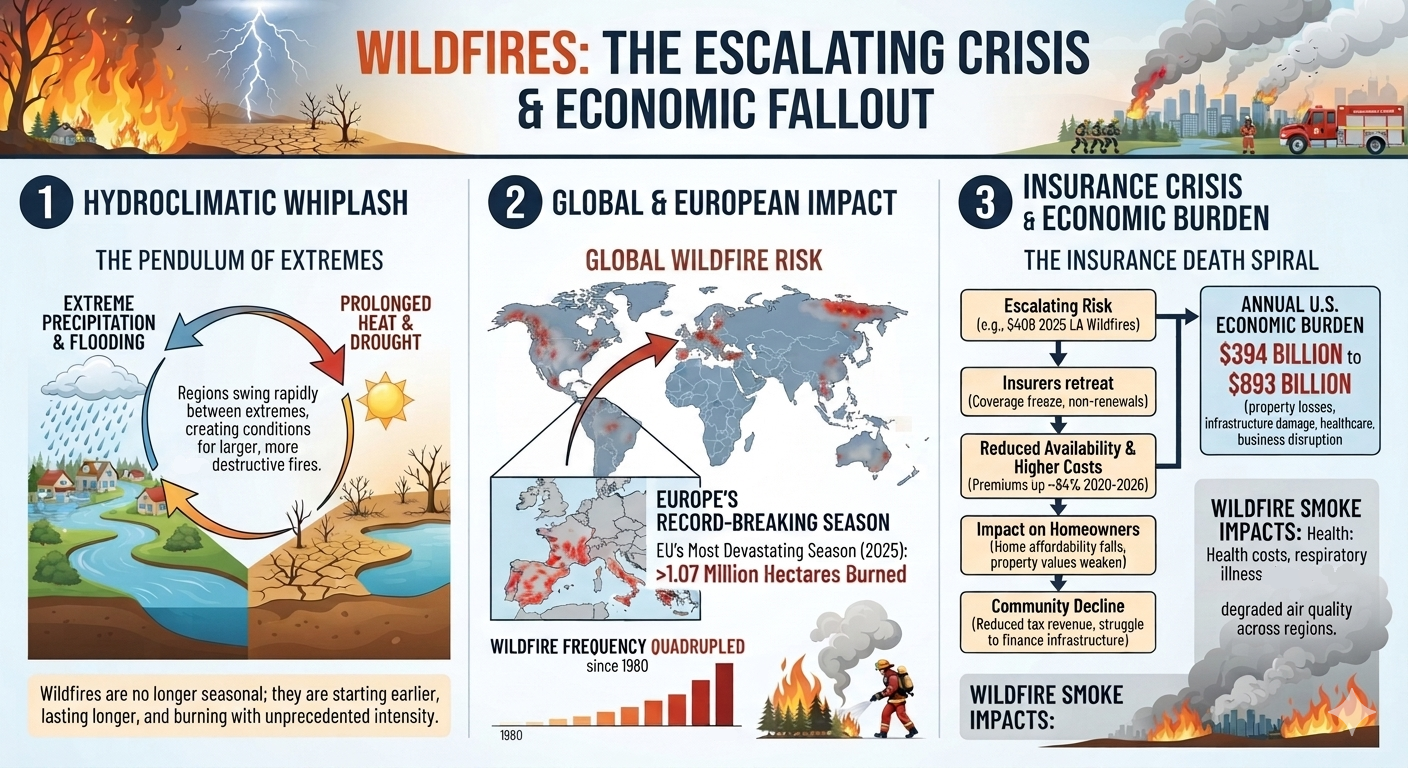
Wildfires are emerging as a major threat to global carbon sequestration capacity. Fire seasons are lengthening, while wildfires are becoming more frequent, widespread, and intense. This represents a global phenomenon, with regions such as Canada and Siberia becoming areas of particular concern due to the scale of their forests, the amount of carbon stored in vegetation and soils, and the potential for large-scale feedback effects.
Healthy forests function as critical carbon sinks by absorbing atmospheric CO₂ through photosynthesis and storing carbon in biomass and soils. However, increasingly severe wildfires can rapidly reverse this process by releasing decades to centuries of stored carbon back into the atmosphere.
The wildfire feedback cycle is accelerating:
Climate Warming → Hotter and Drier Conditions → Increased Vegetation Stress → Larger Wildfires → CO₂ and Methane Emissions → Additional Warming → More Extreme Fire Conditions
Wildfires contribute to climate destabilization through multiple pathways:
- Carbon dioxide (CO₂) emissions: Burning forests releases large quantities of stored carbon, reducing the ability of ecosystems to offset human emissions.
- Methane (CH₄) emissions: Incomplete combustion produces methane, a highly potent greenhouse gas that further amplifies warming.
- Ozone formation: Wildfire emissions release nitrogen oxides (NOₓ) and volatile organic compounds (VOCs), which contribute to the formation of tropospheric ozone. This ozone further damages surviving vegetation and reduces future carbon uptake.
- Ecosystem degradation: Severe fires can destroy mature forests, damage soils, eliminate seed sources, and slow or prevent natural regeneration.
Canada and Siberia are especially important because their vast boreal forests store enormous quantities of carbon. As warming accelerates, these ecosystems are increasingly vulnerable to drought, insect outbreaks, permafrost degradation, and extreme fire events. The resulting emissions create a dangerous feedback loop in which forests that historically served as long-term carbon sinks increasingly become sources of atmospheric carbon.
The interaction between wildfire emissions, ozone pollution, methane release, and declining vegetation resilience represents a compound climate feedback system:
Wildfire → CO₂ + Methane + Ozone Precursors → Increased Atmospheric Warming → Vegetation Stress → Greater Fire Risk
As these feedback mechanisms intensify, wildfire activity becomes more than a regional ecological disturbance—it becomes a global factor capable of accelerating carbon-cycle disruption and undermining one of Earth’s most important climate stabilization systems.
C. Water Stress: Climatic Whiplash
Modern forests are increasingly exposed to climatic whiplash—rapid and extreme transitions between opposite water-related stresses. Instead of experiencing gradual seasonal changes, many ecosystems now face abrupt shifts from prolonged drought to intense rainfall, creating physiological instability that trees are poorly adapted to withstand. These alternating extremes disrupt root systems, weaken tree defenses, accelerate disease, and increase mortality.
1. Drought: Hydraulic Failure and Forest Decline
Recent decades have experienced an unprecedented increase in the frequency, duration, and severity of drought events. Rising temperatures intensify drought by increasing evaporation, drying soils, and increasing atmospheric demand for water. Even when annual precipitation remains relatively stable, warmer conditions can create effective drought by causing plants to lose water faster than ecosystems can replenish it.
During prolonged drought, trees experience several cascading stresses:
- Hydraulic failure: As soil moisture declines, trees struggle to transport water from roots to leaves through their vascular systems. Extreme water deficits can cause air bubbles (embolism) to form in xylem vessels, interrupting water flow and leading to canopy dieback.
- Reduced photosynthesis: Stomata close to conserve water, limiting carbon dioxide uptake and reducing the tree’s ability to produce energy.
- Carbon starvation: Continued drought forces trees to consume stored energy reserves for survival, leaving fewer resources for growth, reproduction, and defense.
- Increased vulnerability to pests and pathogens: Water-stressed trees produce fewer defensive compounds, allowing insects such as bark beetles and fungal diseases to spread more easily.
- Wildfire amplification: Dry vegetation, dead branches, and weakened forests create more available fuel, increasing fire intensity and ecosystem damage.
Drought stress is especially damaging when combined with rising temperatures because heat and water loss reinforce each other. A hotter atmosphere can extract more moisture from vegetation, producing a feedback loop in which stressed forests become increasingly unable to recover.
2. Excess Rain and Acid Rain: Flooding, Nutrient Loss, and Soil Degradation
Climate change is also increasing the occurrence of extreme precipitation events, creating the opposite form of water stress. Intense rainfall can overwhelm soils, saturate root zones, and damage forests through erosion, nutrient loss, and chemical changes.
Excess rainfall—often occurring after drought conditions—creates a form of hydrological shock:
- Root oxygen deprivation: Waterlogged soils prevent roots from receiving sufficient oxygen, impairing nutrient uptake and causing root decay.
- Soil erosion: Heavy rainfall removes topsoil, organic matter, and essential minerals needed for long-term forest productivity.
- Nutrient leaching: Increased precipitation can wash away calcium, magnesium, potassium, and other micronutrients from the soil profile, weakening tree growth and resilience.
- Canopy damage: Severe storms, high winds, and saturated branches can cause physical injury, broken limbs, and increased susceptibility to pathogens.
In addition, rainfall can become more chemically damaging when combined with atmospheric pollutants. Acid deposition, produced primarily from sulfur dioxide (SO₂) and nitrogen oxides (NOₓ), alters soil chemistry by lowering pH and disrupting nutrient availability. Acidic precipitation can:
- Dissolve essential minerals from soils.
- Mobilize toxic metals such as aluminum, which can damage fine roots.
- Reduce beneficial microbial activity needed for nutrient cycling.
- Impair trees’ ability to absorb water and nutrients.
The interaction between excessive rainfall and acidification creates a compounding stress: water may be abundant, yet the soil environment becomes increasingly hostile to plant survival.
3. The Drought–Flood Cycle: A New Ecological Stress Pattern
The greatest threat is not drought or excessive rainfall alone, but the increasing frequency of rapid transitions between extremes. A forest weakened by drought may not recover when heavy rains arrive because damaged roots, depleted energy reserves, and altered soils reduce its ability to absorb and utilize water.
This creates a destructive cycle:
Drought → Root damage → Reduced resilience → Extreme rainfall → Soil disruption → Disease expansion → Greater drought vulnerability
As climate variability intensifies, forests are increasingly subjected to conditions outside their historical range. The result is a destabilized water cycle in which trees experience simultaneous stress from too little water, too much water, and declining water quality—accelerating canopy loss, ecosystem degradation, and forest mortality.
Further reading: Will Tree Species Survive Climate Change?
D. Soil Degradation and Insect Apocalypse
1. Why Soil May Be the Most Important Piece of the Climate Change Puzzle
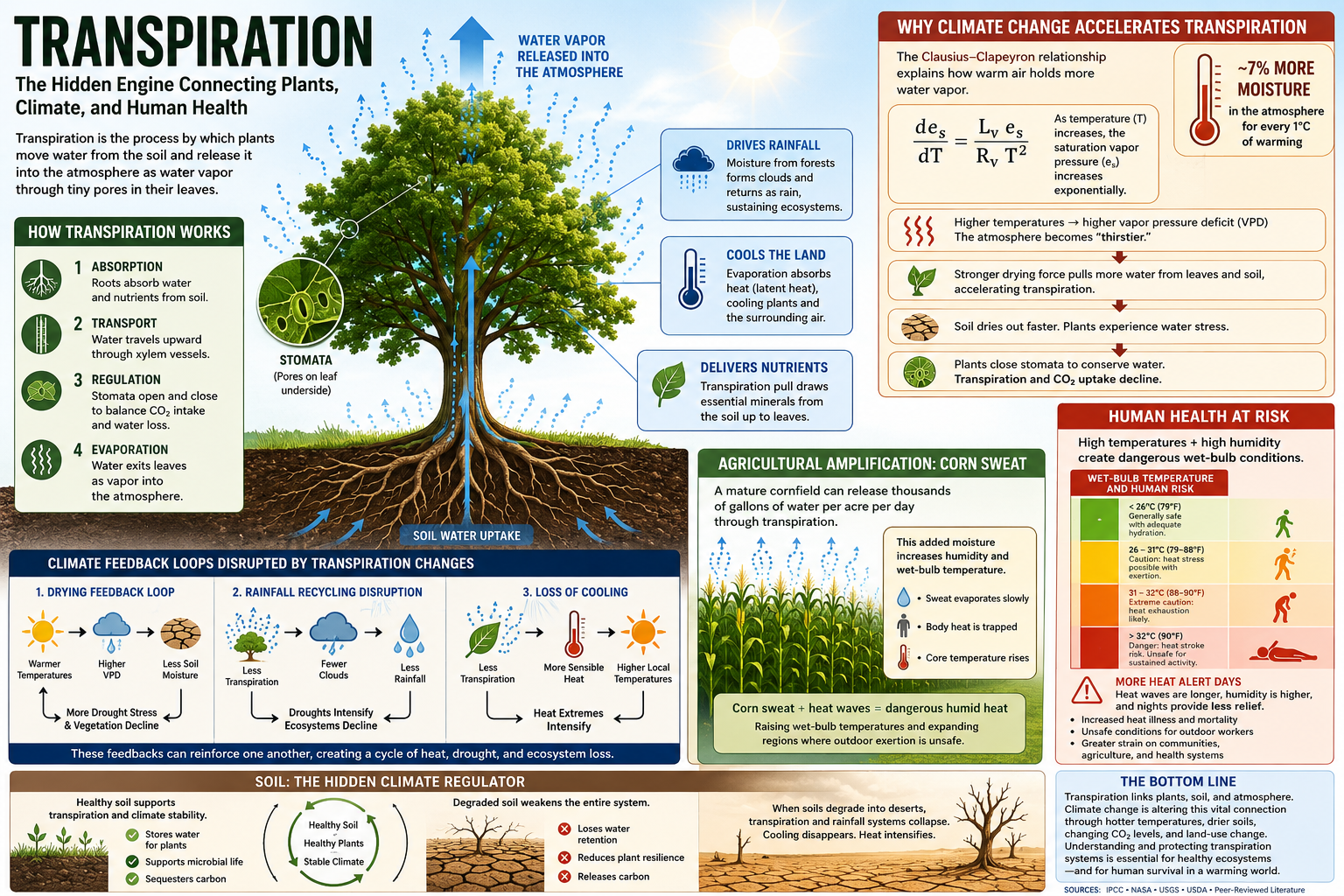
Global warming is driven by an increase in thermal energy within Earth’s climate system. This system is composed of interconnected subsystems, including the atmosphere, oceans, land, and biosphere. Because these components interact continuously through complex feedback mechanisms, climate change is not a simple linear process but a dynamic system governed by nonlinear relationships.
Chaos theory highlights the complexity and sensitivity of these interconnected systems, and nowhere is this complexity more evident than in the interactions between soil, the atmosphere, oceans, and living organisms.
What makes soil uniquely important in addressing the climate crisis is that soil is alive. Unlike the atmosphere and oceans, which are primarily composed of inorganic matter and respond mainly through physical and chemical processes, soil is a dynamic biological system containing billions of organisms, including fungi, bacteria, microbes, insects, and plant roots.
These organisms regulate essential Earth-system processes, including:
- carbon sequestration;
- nutrient cycling;
- water storage and infiltration;
- plant productivity;
- ecosystem resilience;
- and atmospheric carbon exchange.
Healthy soil provides one of the most adaptable and powerful natural mechanisms for slowing climate feedback loops. It functions not merely as a physical substrate for plant growth, but as a living carbon reservoir capable of storing enormous quantities of organic carbon.
Soil as a Global Carbon Reservoir
Healthy soils act as major carbon sinks by capturing carbon dioxide (CO₂) through plant growth and transferring carbon into organic matter. Microbial communities and soil organisms then stabilize and store this carbon for extended periods.
However, when soil becomes degraded, this stored carbon is released back into the atmosphere, accelerating climate change.
Soil degradation creates a destructive cycle:
Soil Damage → Reduced Carbon Storage → Increased Atmospheric CO₂ → Additional Warming → Further Soil Stress
When soil ecosystems collapse, they can enter a state of desertification—a transformation in which once-productive land loses biological function and becomes increasingly unable to support vegetation.
Desertification represents a critical loss of ecosystem capacity. As soils become barren:
- carbon sequestration declines;
- moisture retention decreases;
- erosion accelerates;
- biodiversity collapses;
- and land becomes increasingly vulnerable to drought and extreme heat.
The result is a shift from soil functioning as a climate stabilizer to becoming a contributor to climate instability.
Soil Degradation and Desertification
Erosion
Loss of topsoil through deforestation, overgrazing, intensive agriculture, and poor land management removes the most biologically active and carbon-rich layer of soil. This reduces fertility, water retention, and ecosystem productivity.
Loss of Soil Structure
Disturbance from intensive agriculture, deforestation, and chemical degradation reduces soil porosity and infiltration capacity. Compacted soils limit root growth, reduce water absorption, and increase runoff and erosion.
Decreased Carbon Sequestration
The loss of organic matter reduces the soil’s ability to store carbon. As microbial communities decline and soil structure deteriorates, carbon previously locked underground can return to the atmosphere.
Loss of Biodiversity
Healthy soils depend on diverse microbial, fungal, plant, and animal communities. Declining biodiversity weakens nutrient cycling, reduces ecosystem resilience, and limits the ability of soils to recover from climate stress.
Increased Climate Vulnerability
Degraded soils amplify climate extremes by increasing:
- drought severity through reduced water retention;
- flooding through increased runoff;
- heat stress through loss of vegetation cover;
- and wildfire risk through increased dryness and vegetation stress.
Saltwater Intrusion and Soil Collapse
Rising seas and changing hydrological patterns are increasing saltwater intrusion into coastal soils. Increased salinity creates multiple stress pathways:
- reduced plant growth and impaired nutrient uptake;
- degradation of soil structure through chemical disruption;
- compaction and poor drainage;
- nutrient imbalance affecting plant metabolism;
- salt toxicity that damages vegetation and reduces biodiversity.
Once soils become highly saline, restoration is often difficult, expensive, and resource-intensive.
Desertification and Savannization
Desertification transforms fertile ecosystems into increasingly arid and unproductive landscapes. This process reduces vegetation cover, decreases carbon storage, accelerates erosion, and creates additional warming feedbacks.
Savannization represents a major biome transition in which dense forests—particularly tropical forests—shift toward open savanna ecosystems. This transformation can occur when moisture recycling declines and fire feedbacks intensify.
The loss of forests reduces evapotranspiration, decreases regional rainfall generation, and creates conditions that further reinforce ecosystem drying.
2. Insect Collapse: The Hidden Breakdown of Earth’s Biological Infrastructure
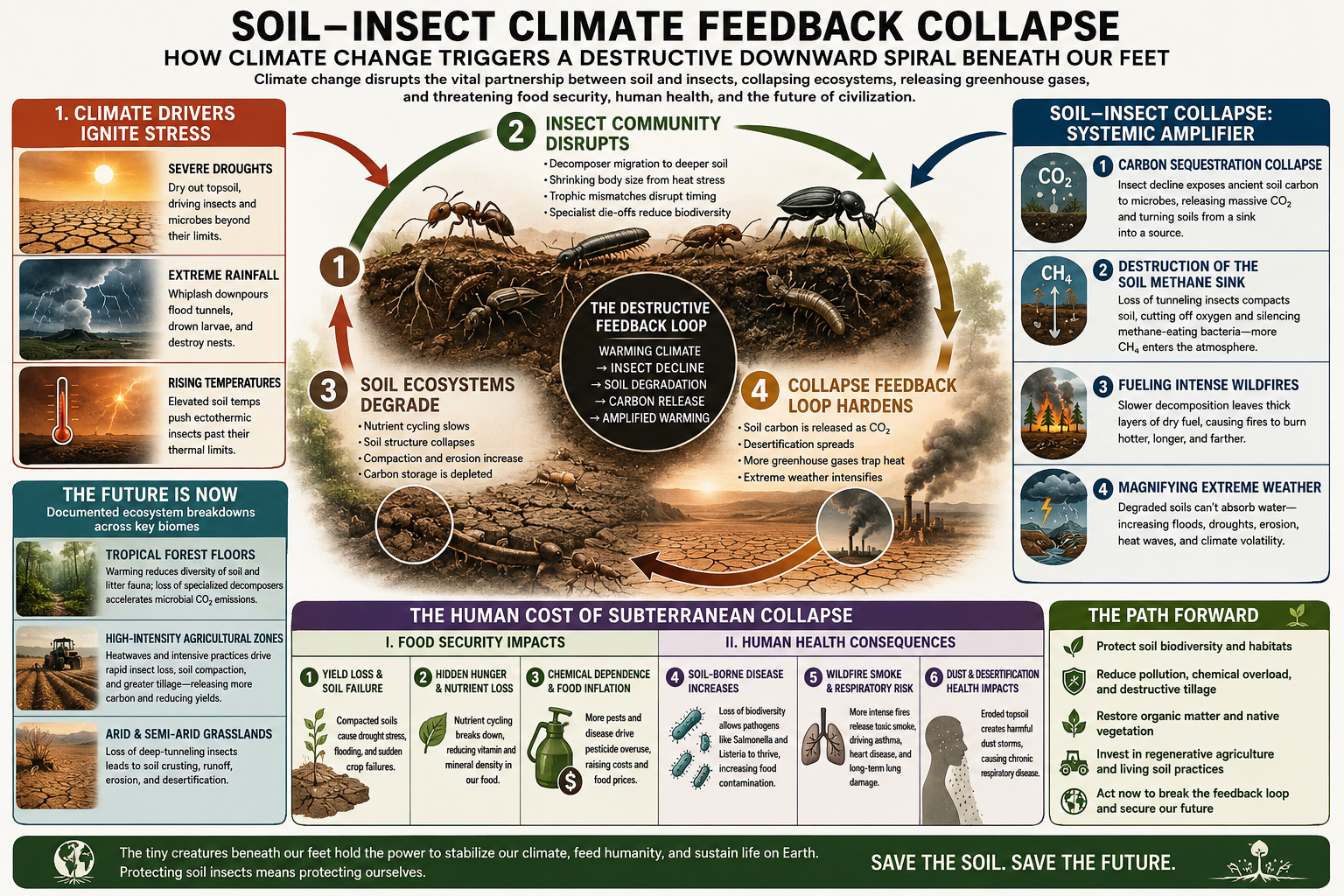
Climate change is not only transforming the atmosphere, oceans, and visible landscapes of Earth. It is also disrupting one of the planet’s most important hidden systems: the living biological network beneath and within ecosystems.
Soil and insect communities exist in a highly interconnected relationship. Insects regulate critical ecological processes, including:
- decomposition;
- nutrient cycling;
- carbon storage;
- soil aeration;
- water movement;
- and the physical structure of soil.
As global temperatures rise and extreme weather events intensify, these relationships are being pushed beyond their historical limits.
Soil insects, particularly ectothermic organisms whose body temperatures are controlled by environmental conditions, are highly vulnerable to:
- rising temperatures;
- drought;
- flooding;
- habitat destruction;
- pesticide exposure;
- and ecosystem instability.
At the same time, declining insect populations weaken the biological processes that maintain soil health. As insects disappear, decomposition slows, nutrient cycling is disrupted, and soil structure deteriorates.
This creates a destructive feedback loop:
Climate Warming → Insect Decline → Soil Degradation → Reduced Carbon Storage → Increased Atmospheric CO₂ → Additional Warming → Further Insect Decline
The collapse of soil-insect systems represents far more than a biodiversity crisis. It threatens one of Earth’s largest carbon reservoirs and one of humanity’s most important life-support systems.
As subterranean ecosystems deteriorate, the impacts extend upward into:
- agricultural productivity;
- forest health;
- wildfire dynamics;
- atmospheric carbon cycling;
- food security;
- and human health.
The decline of soil biodiversity represents a fundamental disruption of the biological infrastructure that supports planetary stability. As these hidden ecosystems weaken, Earth’s ability to regulate climate and sustain life becomes increasingly compromised.
E. Pests
1. Insects and Worms
Insect collapse, soil invertebrate disruption, and worm invasions are novel climate-linked stressors.
2. Invasive Species
Invasive insects and plants–including ailanthus, emerald ash borer, and Asian longhorn beetle–destabilize forests.
3. Short, Warm Winters
- At -17.8 °C: only 5% of emerald ash borer larvae die
- At -34 °C: 98% mortality
F. Climate Change Feedback Loops
- Warming → drought → tree death → reduced carbon sink → more warming
- Ozone formation → reduced NPP → increased CO₂ → enhanced warming
- Wildfires → GHG release → more warming → more fires
- Permafrost thaw → CO₂ and CH₄ release → boreal forest die-off
Example: Amazon Rainforest Dieback
IV. Conclusion
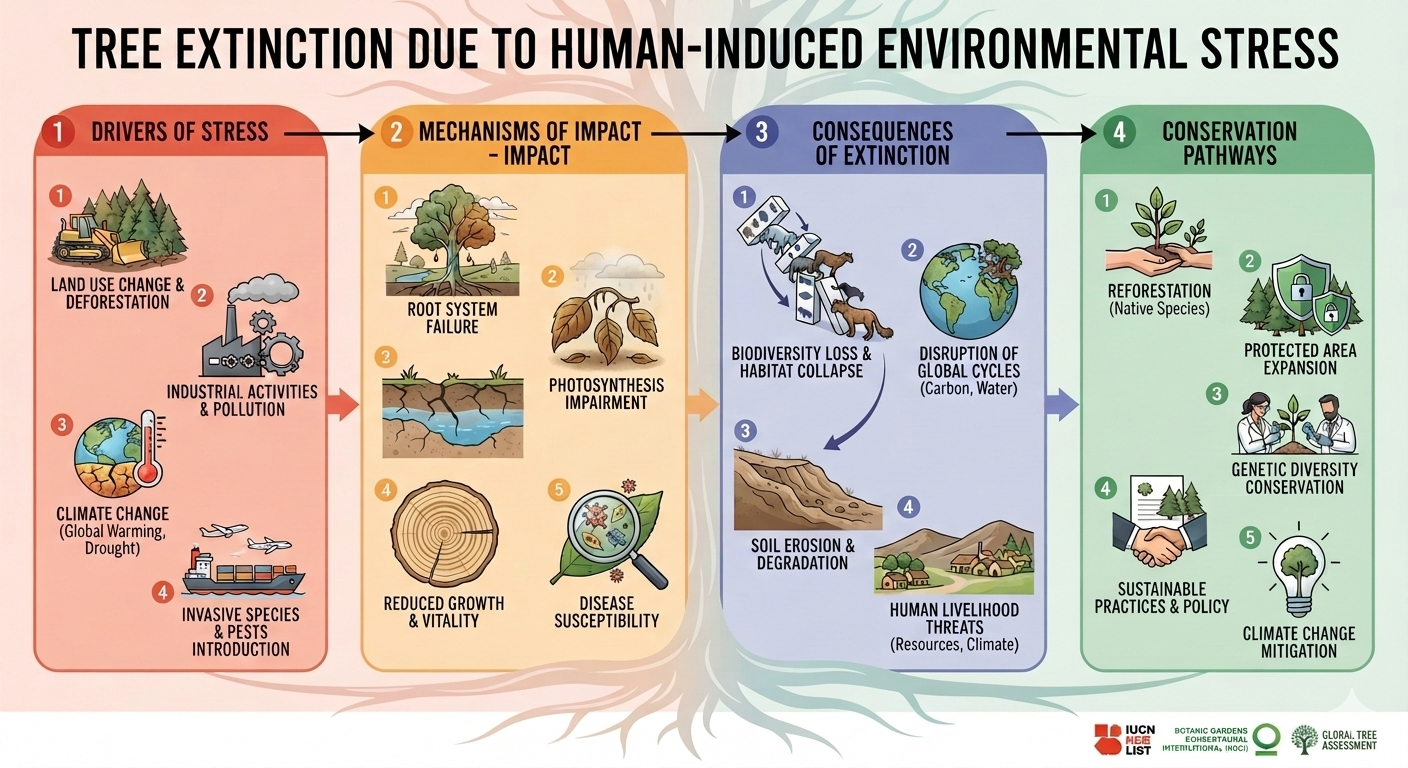
The evidence presented throughout this paper points to a single overarching conclusion: the global decline of trees is not being driven by one environmental stressor, but by the convergence of many reinforcing stressors acting simultaneously. Ozone pollution, prolonged drought, extreme rainfall, soil degradation, insect collapse, wildfire, invasive pests, and a warming climate are no longer isolated problems. They interact through complex feedback loops that weaken forests faster than they can recover.
Trees evolved under relatively stable climatic conditions. Today’s rapidly changing environment is pushing many species beyond their physiological limits. Chronic ozone exposure reduces photosynthesis and weakens plant defenses. Water stress alternates between prolonged drought and extreme flooding, damaging root systems and disrupting nutrient cycling. Degraded soils lose their ability to store carbon and support healthy microbial communities. Declining insect populations impair decomposition and nutrient recycling, while larger, more frequent wildfires release enormous quantities of carbon dioxide, methane, and ozone precursors back into the atmosphere. Each stressor amplifies the others, producing cascading effects throughout the biosphere.
The consequences extend far beyond the loss of forests themselves. Trees regulate atmospheric carbon dioxide, moderate local and regional climates, recycle water through evapotranspiration, stabilize soils, protect biodiversity, and sustain the ecological processes upon which agriculture and human civilization depend. As forests decline, these essential ecosystem services weaken, increasing the likelihood of additional climate feedbacks that further accelerate environmental change.
Perhaps the most troubling aspect of this process is that forests are not simply victims of climate change—they are also one of Earth’s primary defenses against it. As tree mortality increases, the planet loses one of its largest natural carbon sinks, reducing its capacity to remove carbon dioxide from the atmosphere precisely when that function is needed most. A weakening biosphere becomes less capable of buffering human emissions, allowing warming to accelerate through self-reinforcing feedback mechanisms.
Despite the magnitude of these challenges, the trajectory is not predetermined. Many of the primary drivers of forest decline—including fossil fuel combustion, ozone precursor emissions, habitat destruction, unsustainable land management, and ecosystem fragmentation—are the direct result of human activity. Actions that reduce air pollution, restore soils, protect mature forests, improve watershed management, reduce wildfire risk, conserve biodiversity, and rapidly transition to low-emission energy systems can strengthen ecosystem resilience and slow the progression of these feedback loops.
The future of Earth’s forests will play a central role in determining the future of Earth’s climate. Protecting trees is no longer simply an issue of conservation or biodiversity—it is a prerequisite for maintaining the stability of the global climate system and the ecological foundation upon which human societies depend. Understanding the interconnected nature of these environmental stressors is therefore essential if we are to preserve both the world’s forests and the life-support systems they sustain.
RESOURCES
- Ozone = #1 Climate Gas
- Soil's Crucial Role, Soil Degradation and Desertification
- Transpiration, Atmospheric Moisture Recycling, and Climate-Driven Heat Stress in a Warming World
- Soil–Insect Climate Feedback Collapse: How Climate Change Is Triggering a Downward Spiral in Earth’s Hidden Ecosystems
- Amazon Rainforest Dieback: Emerging Risks, Feedback Loops, and Scenario-Based Projections
SOURCES
- The Ozone Feedback Theory: Tropospheric Ozone as a Driver of Ecosystem Decline, Carbon Sink Failure, and Climate Acceleration
- The Ozone Climate Feedback: Fossil Fuel Combustion, Methane Emissions, Wildfires, and Ecosystem Degradation as Drivers of Self-Reinforcing Global Warming
- When Climate Energy Changes the Ecosystem: Forests, Fire, and the Transition to a New State
- Ozone as a Climate Multiplier: Key Coupling Agent in Chemistry–Climate Feedbacks
- Climate-Driven Range Shifts and the Nonlinear Acceleration of Ecosystem Destabilization
- CO₂ Feedbacks: Climate Feedback Loops Are Weakening Earth’s Natural Carbon Sinks
- The Decline of Penn's Sylvania
- Phenology: Disruption in Penn’s Sylvania
- Pennsylvania’s Forests: A Race to Find Climate-Resilient Species
- Create a Climate-Resilient Environment Around Your Home
- Membrane Domain — The Collapse of Natural Carbon Sinks
- Ozone Feedbacks From Carbon Combustion: Ecosystem Collapse and the Failure of Biofuel Narratives
- The Unraveling of Forests
- World Meteorological Organization
- Global Carbon Project
- Nature (2025) — Africa forest sink-to-source transition
- IPCC AR6
- NOAA
- NASA
- Systemic Collapse