The human gut microbiome is one of the body’s most complex and essential ecosystems, influencing digestion, immunity, metabolism, and even brain function. A growing body of scientific evidence indicates that climate change is emerging as a significant environmental threat to this internal ecosystem.
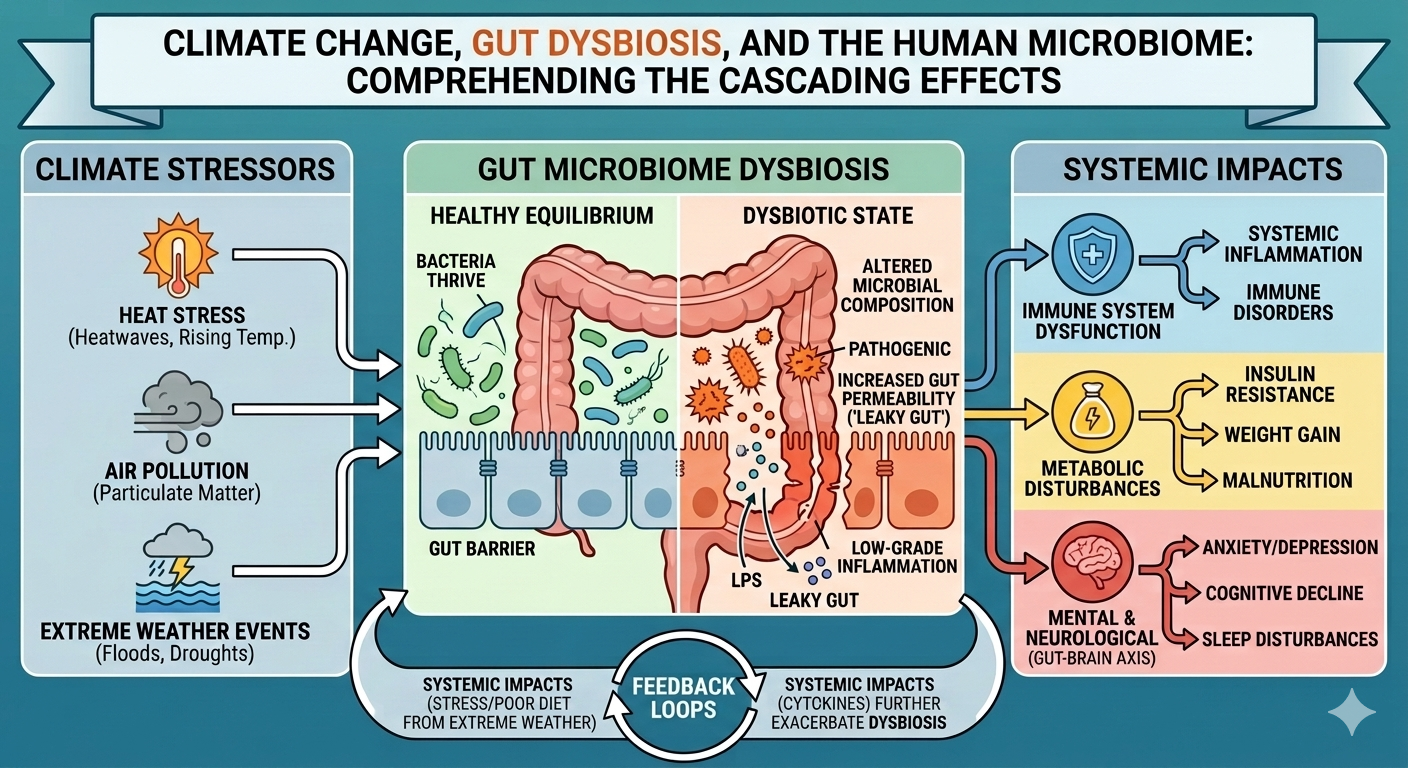
Climate change can induce gut dysbiosis—an imbalance in which beneficial microorganisms decline while opportunistic or pathogenic microbes proliferate. Recent clinical reviews, including research published in The Lancet Planetary Health, suggest that climate-driven environmental changes disrupt the gut microbiome through both direct physiological stress and indirect environmental pathways. The consequences extend well beyond digestive discomfort, affecting immune regulation, sleep quality, mental health, and overall resilience.
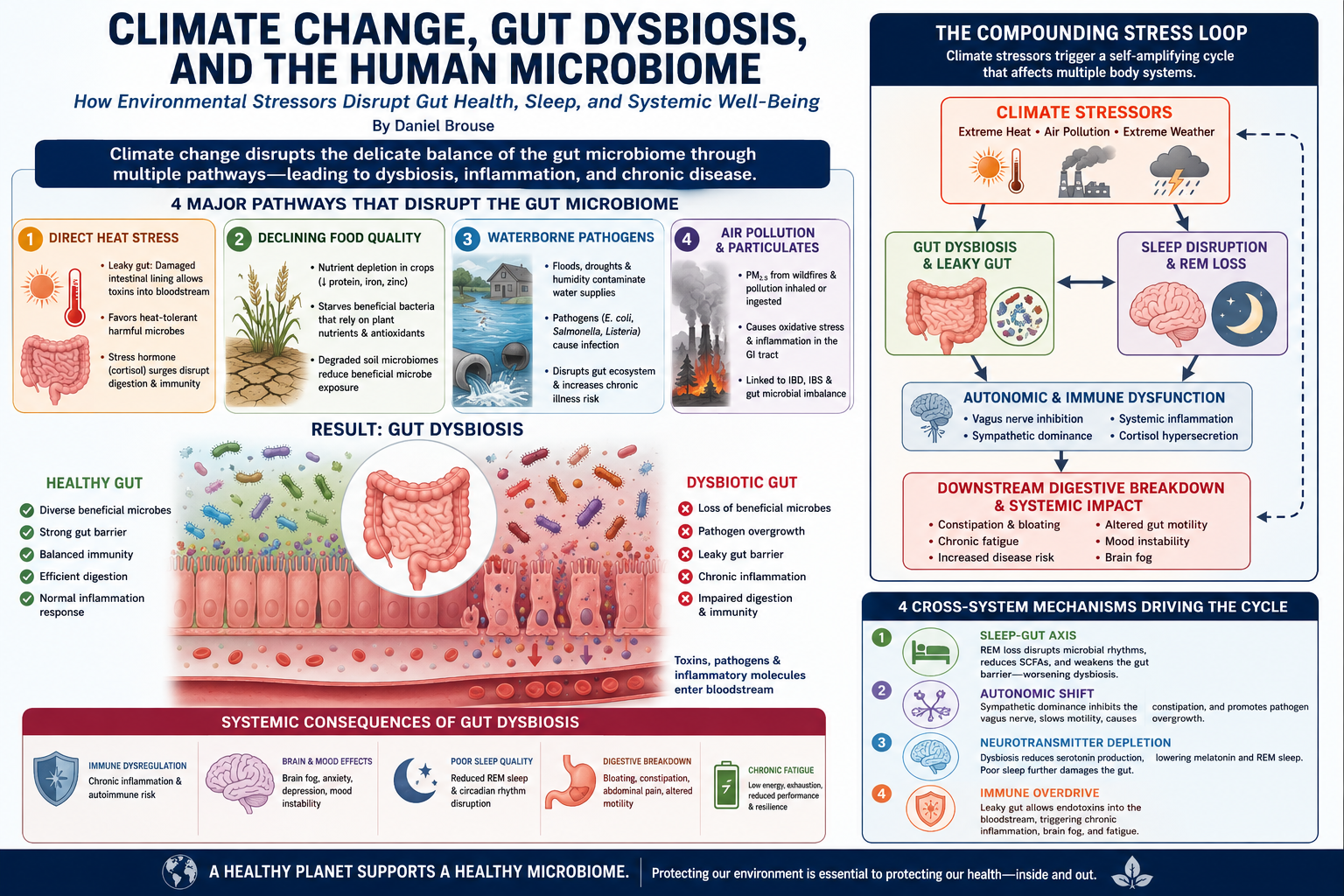
Climate change degrades the gut microbiome through several interconnected mechanisms.
Extreme heat affects far more than body temperature. It alters gastrointestinal physiology in ways that directly damage the gut ecosystem.
Heat stress weakens the intestinal barrier, increasing its permeability. This allows bacteria, endotoxins, and inflammatory compounds to enter the bloodstream, triggering systemic inflammation and immune activation.
Elevated body temperatures alter the intestinal environment, favoring heat-tolerant microbial populations while reducing beneficial bacteria that regulate metabolism, digestion, and immune function.
Exposure to prolonged heat stimulates increased production of cortisol and other stress hormones. Elevated cortisol alters gut oxygen levels, immune signaling, and microbial composition while impairing normal digestive processes.
Climate change is also altering the nutritional quality of the global food supply.
Elevated atmospheric carbon dioxide changes plant carbon-to-nitrogen ratios, reducing concentrations of essential nutrients including:
These nutritional changes reduce both the quality of human diets and the diversity of nutrients available to gut microbes.
Beneficial bacteria rely on dietary fiber, antioxidants, and complex plant compounds. As these nutrients decline, populations such as Bacteroidetes decrease while pro-inflammatory microbial groups expand.
The Biodiversity Hypothesis proposes that biologically rich soils contribute beneficial environmental microbes that help educate the human immune system. Climate-driven degradation of soil biodiversity reduces this microbial exposure, potentially increasing immune dysfunction and inflammatory disease.
Climate change increases flooding, drought, and water-system failures, all of which elevate exposure to enteric pathogens.
Common organisms include:
These pathogens can produce acute gastrointestinal infections while permanently altering the composition of the gut microbiome, increasing susceptibility to chronic inflammatory diseases.
Climate change is increasing exposure to airborne pollutants, particularly fine particulate matter (PM₂.₅).
Although inhaled, these particles are also swallowed through mucus clearance and contaminated food or saliva.
Within the gastrointestinal tract they promote:
The most significant health impacts occur because climate stressors do not operate independently. Instead, they reinforce one another, creating a self-amplifying cycle that affects multiple body systems simultaneously.
                    CLIMATE STRESSORS
      (Heat • Air Pollution • Extreme Weather)
                         │
        ┌────────────────┴────────────────┐
        ▼                                 ▼
  Gut Dysbiosis                     Sleep Disruption
  Leaky Gut                         Reduced REM Sleep
        │                                 │
        └──────────────┬──────────────────┘
                       ▼
        Autonomic & Immune Dysfunction
      • Elevated Cortisol
      • Reduced Vagal Activity
      • Chronic Inflammation
      • Sympathetic Dominance
                       │
                       ▼
         Digestive and Systemic Breakdown
      • Constipation
      • Altered Gut Motility
      • Chronic Fatigue
      • Mood Disorders
• Brain FogThe gut microbiome follows a circadian rhythm closely linked to the brain’s sleep-wake cycle.
Heat waves frequently fragment sleep and reduce REM sleep, disrupting the normal daily oscillations of gut microbial populations.
Sleep deprivation decreases beneficial bacteria such as Lactobacillus and Bifidobacterium. These organisms produce short-chain fatty acids (SCFAs), which:
Reduced SCFA production weakens intestinal integrity and promotes chronic inflammation.
Poor sleep activates stress pathways that further increase intestinal permeability, amplifying the direct damage caused by heat exposure.
Normal digestion depends upon the parasympathetic nervous system—the body’s “rest and digest” mode.
Heat stress, poor sleep, and pollution shift the body toward chronic sympathetic activation (“fight or flight”).
Suppression of the vagus nerve disrupts communication between the brain and the gastrointestinal tract.
Reduced vagal activity decreases intestinal movement while heat diverts blood flow away from digestive organs toward the skin for cooling.
The result is:
Slower intestinal transit allows opportunistic bacteria more time to multiply and produce inflammatory metabolites, further worsening dysbiosis.
The gut and brain communicate continuously through the gut-brain axis.
Approximately 90% of the body’s serotonin is produced within the gastrointestinal system, largely under the influence of the gut microbiome.
Serotonin serves as the biochemical precursor to melatonin, the hormone responsible for regulating sleep.
When dysbiosis disrupts serotonin production:
This creates a powerful positive feedback loop in which poor gut health degrades sleep, while poor sleep further damages the gut microbiome.
Leaky gut allows bacterial endotoxins—particularly lipopolysaccharides (LPS)—to enter the bloodstream.
This condition, known as metabolic endotoxemia, activates chronic systemic inflammation.
Inflammatory molecules can cross the blood-brain barrier, contributing to:
Climate change is not solely an environmental or atmospheric issue—it is increasingly becoming a public health issue that reaches into the microscopic ecosystems within our own bodies. Heat stress, declining food quality, water contamination, air pollution, and disrupted sleep all converge to reshape the human gut microbiome.
The resulting dysbiosis extends beyond digestion. It contributes to chronic inflammation, weakened immunity, impaired metabolism, sleep disruption, mood disorders, and reduced cognitive performance. Because these physiological systems are tightly interconnected, climate-induced damage to one often amplifies dysfunction in others, creating self-reinforcing cycles that become progressively more difficult to reverse.
Protecting the stability of the Earth’s climate is therefore inseparable from protecting the stability of the human microbiome. As climate change accelerates, preserving environmental health increasingly means preserving human health at its most fundamental biological level.
Additional Sources
Human-Caused Climate Change and Heatwave Trends: Heat Can Kill. Heat Will Harm.
Heat Stress, Environmental Stressors, and the Limits of Human Adaptability
Elevated Nighttime Minimum Temperatures: Climate Change, Feedback Processes, and Heat-Health Impacts
Heat Stress and the Emerging Physiological Limits of Climate Change
Climate Change and Deadly Humid Heat
Climate-Driven Health Collapse Overview
* Our probabilistic, ensemble-based climate model — which incorporates complex socio-economic and ecological feedback loops within a dynamic, nonlinear system — projects that global temperatures are becoming unsustainable this century. This far exceeds earlier estimates of a 4°C rise over the next thousand years, highlighting a dramatic acceleration in global warming. We are now entering a phase of compound, cascading collapse, where climate, ecological, and societal systems destabilize through interlinked, self-reinforcing feedback loops.
We examine how human activities — such as deforestation, fossil fuel combustion, mass consumption, industrial agriculture, and land development — interact with ecological processes like thermal energy redistribution, carbon cycling, hydrological flow, biodiversity loss, and the spread of disease vectors. These interactions do not follow linear cause-and-effect patterns. Instead, they form complex, self-reinforcing feedback loops that can trigger rapid, system-wide transformations — often abruptly and without warning. Grasping these dynamics is crucial for accurately assessing global risks and developing effective strategies for long-term survival.
Bottom line: The question is no longer how warm the planet becomes, but how life on Earth can endure when change outpaces our ability to adapt.
We cannot control the laws of physics, but we can control our pollution. The most effective action is to stop burning fossil fuels.